Education, by nature, is a source of evolution; personal, intellectual, emotional, and even spiritual. Education is a catalyst for change, yet our understanding of it is also, by nature, ever-changing. My own philosophy on what education is, how it's best utilized, and how effective leadership impacts these decisions, is by no means an exception. It's increased in scope, and over time, specifically because of the six structures that make up my personal philosophy; failure, looking ahead, teamwork, immersion, engagement, and perspective.
A good education is one that's synonymous with failure. As a trained scientist and teacher of the subject, I firmly believe that Thomas Edison was on to something when he claimed that "I haven't failed, I have had great success, finding 9,999 ways that do not work." Failure is an imment byproduct of trying the unknown, testing one's knowledge and understanding, and ultimately building upon it.. Embracing the notion of "failure" is one of the largest obstacles of the modern day educator. In an increasingly competitive world, one where perfectionism is pervasive, students and teachers alike are averse to the thought and equate it to inadequacy, The modern leader understands this crippling, misguided mantra, and instead pushes those around him/her to be open to the stumbling blocks that lead to more informed decision making, learning, and ultimately, growth.
A good education is one that looks ahead. We live in an increasingly complex and changing world. We're asking the students of today to be prepared for a world in which the jobs they'll occupy don't yet exist, with technology that doesn't exist, to solve problems that we aren't presently aware of. For many, this paints a deeply troubling, almost apocalyptic picture. A good leader, however, sees this uncertainty as an opportunity—one where teachers and educators can inspire their students to learn about and to explore the unknown. In essence, this means looking at the past, working with what's in the present, and planning for the future.
A good education requires teamwork in accomplishing the above. Though many learners and educators are self-directed, a leader understands that the collective whole can accomplish far more than any one individual. As the level of interconnectedness in the world continues to increase in size and scope, and as the ideas and opinions of others become more accessible, students and teachers alike should be prepared to work as a team, understand the benefits of such work, and use collective action to solve collective problems.
A good education combines different methods of immersion and engagement to inspire students and teachers to learn about the world around them and their place within it. This includes the use of kinesthetic activities, open discussion, inquiry-based instruction, critical analysis of literature, thoughtful reading and writing, the use of technology, and thoughtful reflection. Experiential learning is the most effective way for students to absorb content, and schools must actively seek opportunities for those within their walls to be involved in this type of work. Reflective teaching, and the desire for continuous learning on behalf of those who facilitate the learning process, best ensures that this is taking place, and that one's practice is also evolving.
Doing so enables a good education to increase the perspective of students and teachers both in and out of the classroom. The world is constantly at work, and our students should seek to be an ever increasing part of it. This increased understanding and relativety can manifest itself through service-learning, the open and welcoming expression of diverse opinions, a cultural emphasis on community, and a desire to learn about others.
The thoughtful, emotionally intelligent leader inspires educators to apply themselves to these six principles not just through establishing deep, meaningful personal connections, but by living as an example and by being a source of unending support.
 Failure |  Looking Ahead |
|---|---|
 Teamwork |  Immersion |
 Engagement | 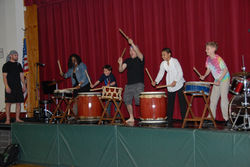 Perspective |